

A delta-neutral strategy (DNS) is a simple yet effective way to farm crypto project points without exposing yourself to price risk.
The idea is to hold two opposite positions of equal size at the same time, so that their gains and losses cancel each other out.
Let's break it down #
Long position
To open a long, you buy tokens on spot or perpetual futures. You earn money when the price goes up — and lose when it goes down.
Short position
To open a short, you sell an asset on perpetual futures that you don't actually own. You earn money when the price falls — and lose when it rises.
Spot the trick? #
These two positions react to price movements in exactly opposite ways. That means if you hold both at the same time, for the same notional size, the moves cancel each other out. Your portfolio's P&L stays close to zero regardless of where the market goes. That's the "delta-neutral" state.
Example #
For simplicity, let's say $BTC = $70,000.
You start farming Nado points and open a $1,000 short on their platform (selling BTC).
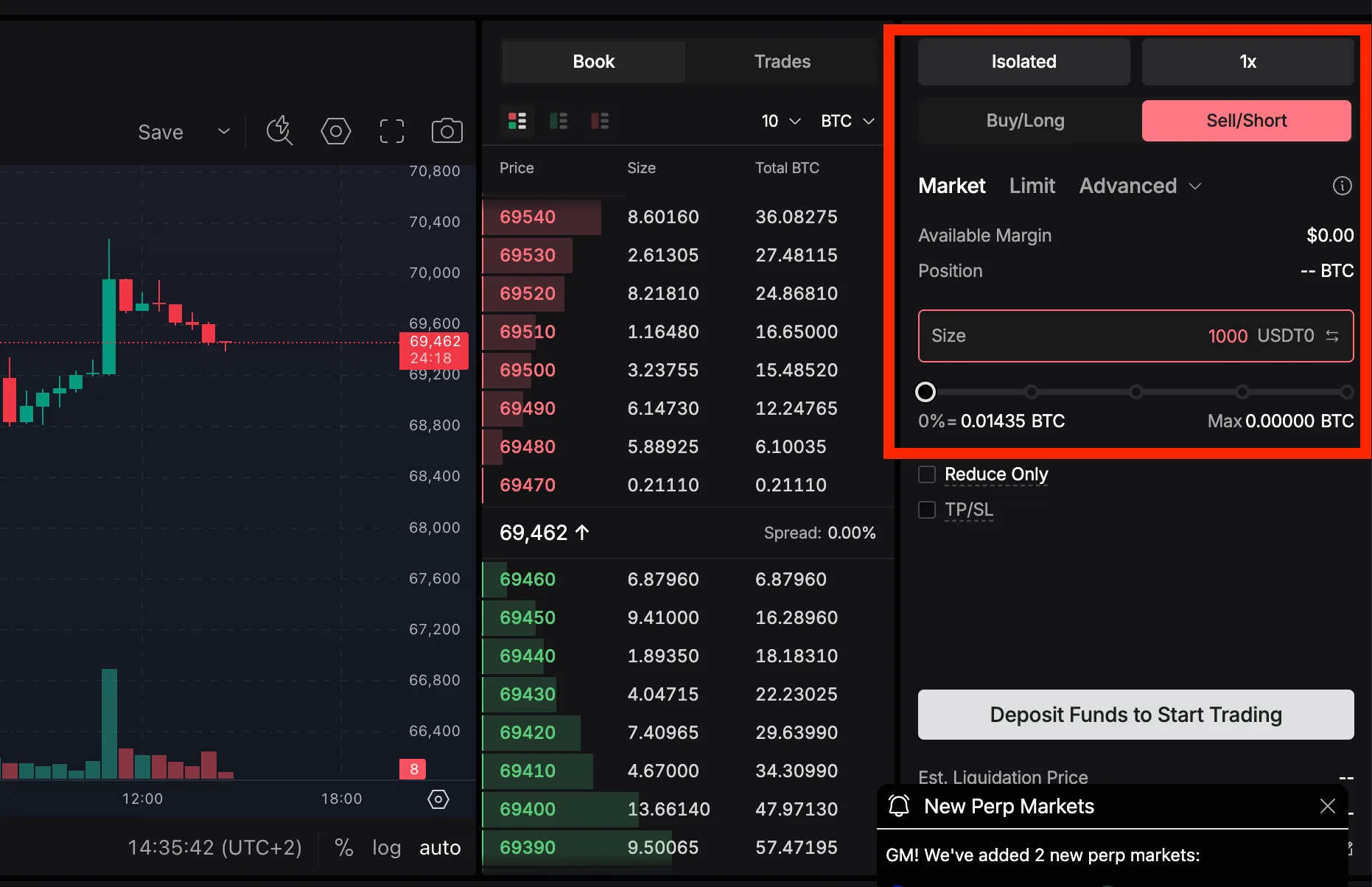
At the same time, you buy $1,000 worth of BTC on ByBit.
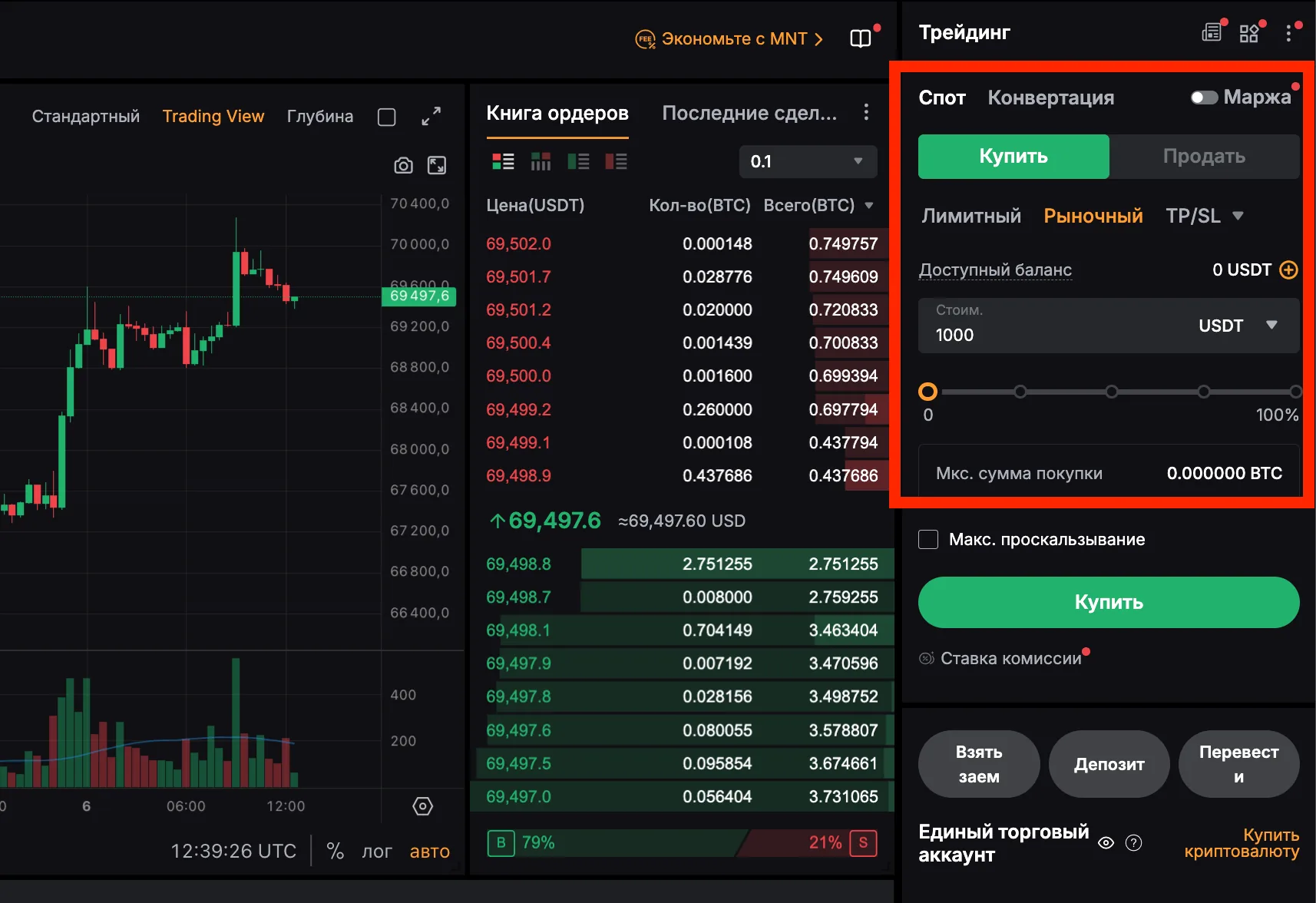
A few hours later, you close both trades. Two scenarios:
Scenario 1: $BTC pumps 10% to $77,000. Your long earns 10% (+$100), your short loses the same amount (−$100). Net change: zero.
Scenario 2: $BTC dumps 10% to $63,000. Your long loses $100, your short earns $100. Net change: zero.
As you can see, your portfolio value stays flat no matter what the market does.
A note on leverage #
Perpetual futures markets let you trade with leverage. Used carefully, leverage lets you significantly scale up your volume and speed up point accumulation — but the risks scale proportionally.
If your unrealized loss hits a certain threshold (the liquidation price), the exchange will force-close your position, and you can lose your entire collateral.
If you're new to this — don't use more than 3x leverage, and don't leave your trades unattended for too long. Check your liquidation price regularly.
Bottom line #
Even with DNS, farming isn't free — exchange fees, spread, and funding rates all eat into your returns. But this strategy lets you dramatically lower the cost per point, cut your risk, and boost your multiplier on the drop.